Projects tagged "3d"
Hopefully something here will catch your eye.
Table of Contents
Ribbon Diagrams February 2017
Parse PDB files and render ribbon diagrams of proteins.
Ribbon diagrams are 3D schematic representations of protein structure.
You've probably happened upon these before. I always thought they looked very complex and never figured I'd know how to create such a diagram myself. After creating FauxGL, however, I was in search of interesting 3D visualizations and decided to research these interesting diagrams.
Roughly, proteins are chains of amino acids that are pieced together while reading genetic code. As a protein is formed, these chains will fold in various ways, forming helixes, strands, and coils. A ribbon diagram depicts the 3D structure of the protein as well as these common secondary structures.
The Protein Data Bank is an online database of over 130,000 PDB files. These files encode all of the information needed to produce a ribbon diagram. With this software, you can simply type rcsb XXXX where XXXX is the alphanumeric PDB code and a PNG will be generated in a few seconds.
Links: GitHub • Twitter Bot • Large Tiled Render


FauxGL January 2017
3D software rendering in pure Go. No OpenGL, no C extensions, no nothin'.
It's like OpenGL, but it's not. It's FauxGL.
It doesn't use your graphics card, only your CPU. So it's slow and unsuitable for realtime rendering. But it's still pretty fast. It works the same way OpenGL works - rasterization.
I mostly wrote this for fun and for learning, but I've already found it useful in other projects.
Features
- STL, OBJ, PLY, 3DS file formats
- triangle rasterization
- vertex and fragment "shaders"
- view volume clipping, face culling
- alpha blending
- textures
- depth biasing
- wireframe rendering
- built-in shapes (plane, sphere, cube, cylinder, cone)
- anti-aliasing (via supersampling)
- parallel processing
Links: GitHub

Mesh Simplification May 2016
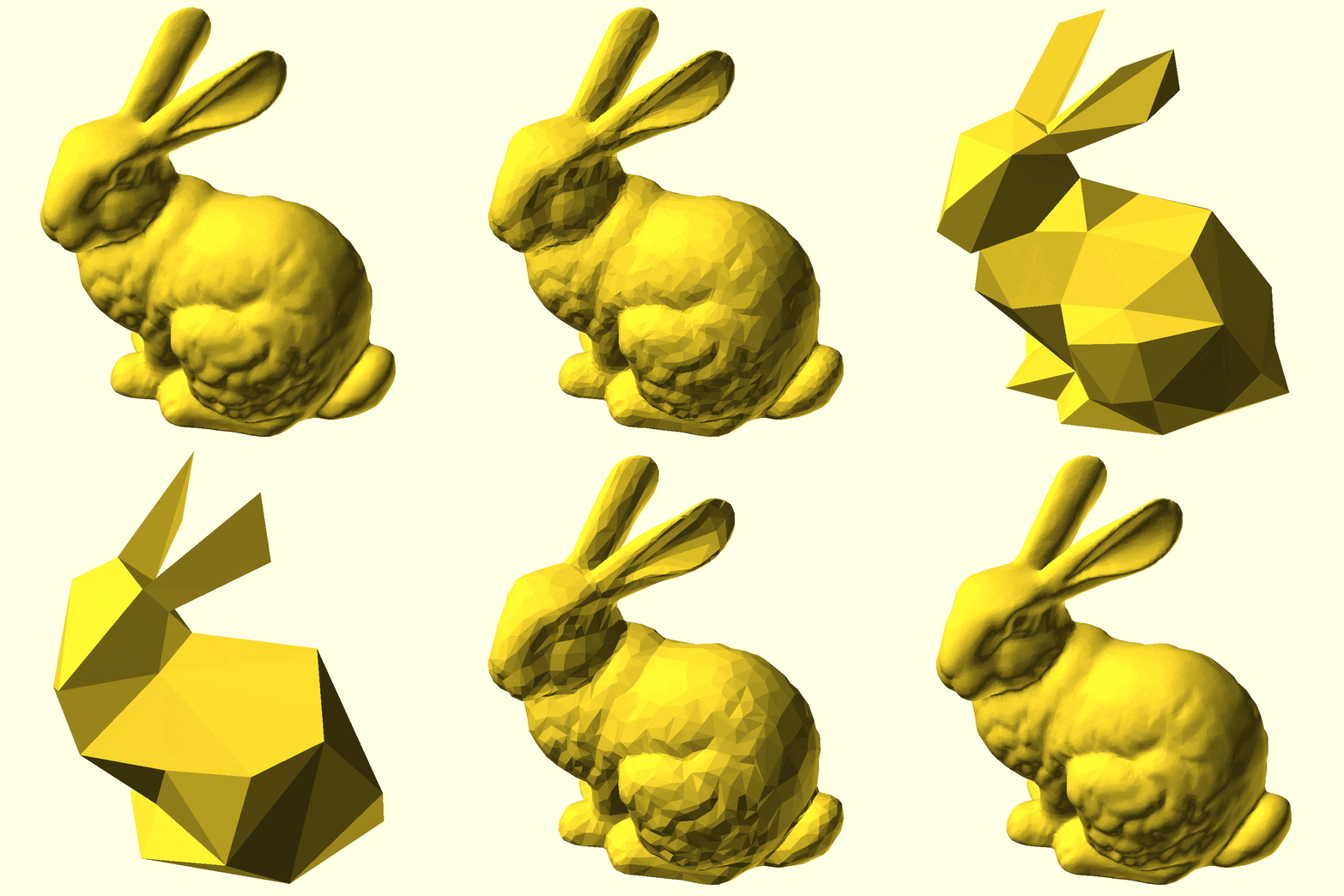
Simple command line tool for simplifying meshes in STL format.
This is a straight-forward implementation of Surface Simplification Using Quadric Error Metrics, SIGGRAPH 97, written in Go. Some problematic meshes don't simplify very well, but overall it works nicely. Watch the animation - it iteratively simplifies the mesh by 50% until only 16 faces remain.
Links: GitHub
Line Art January 2016
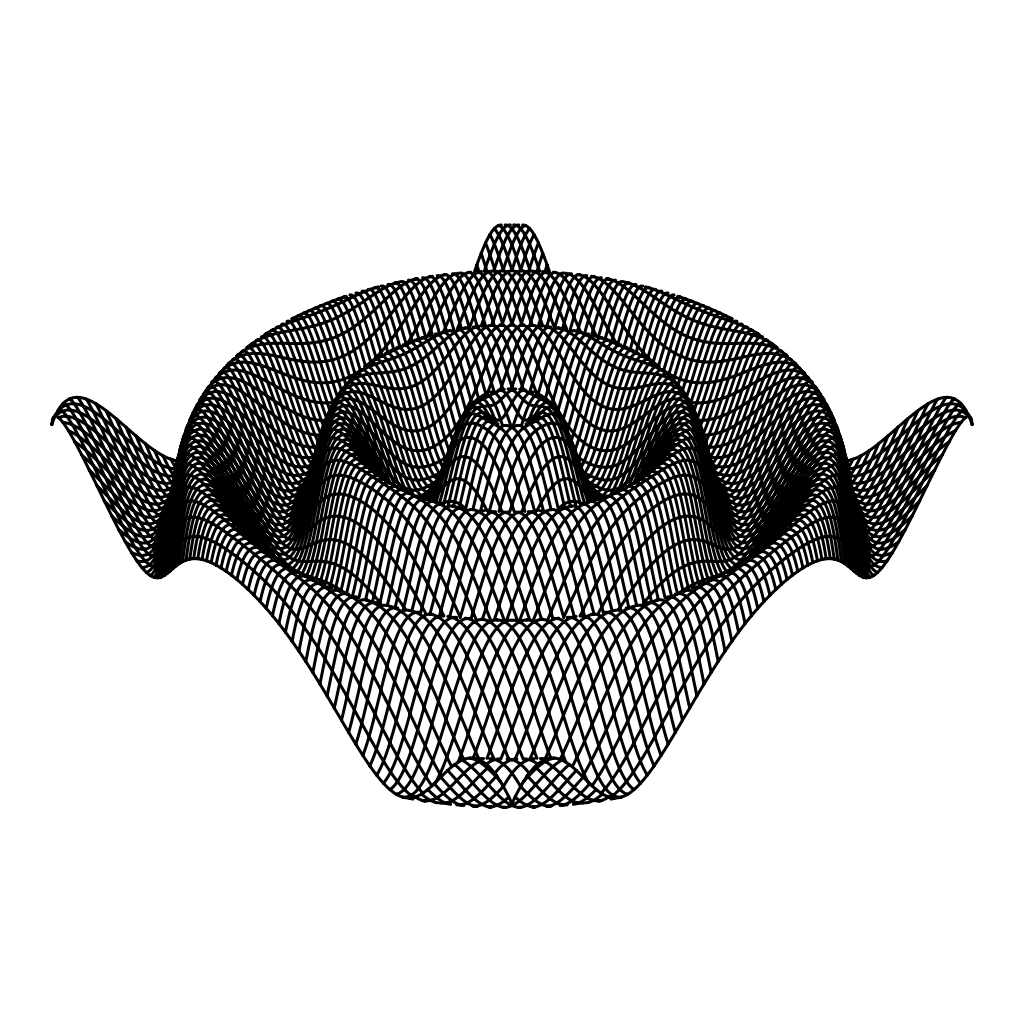
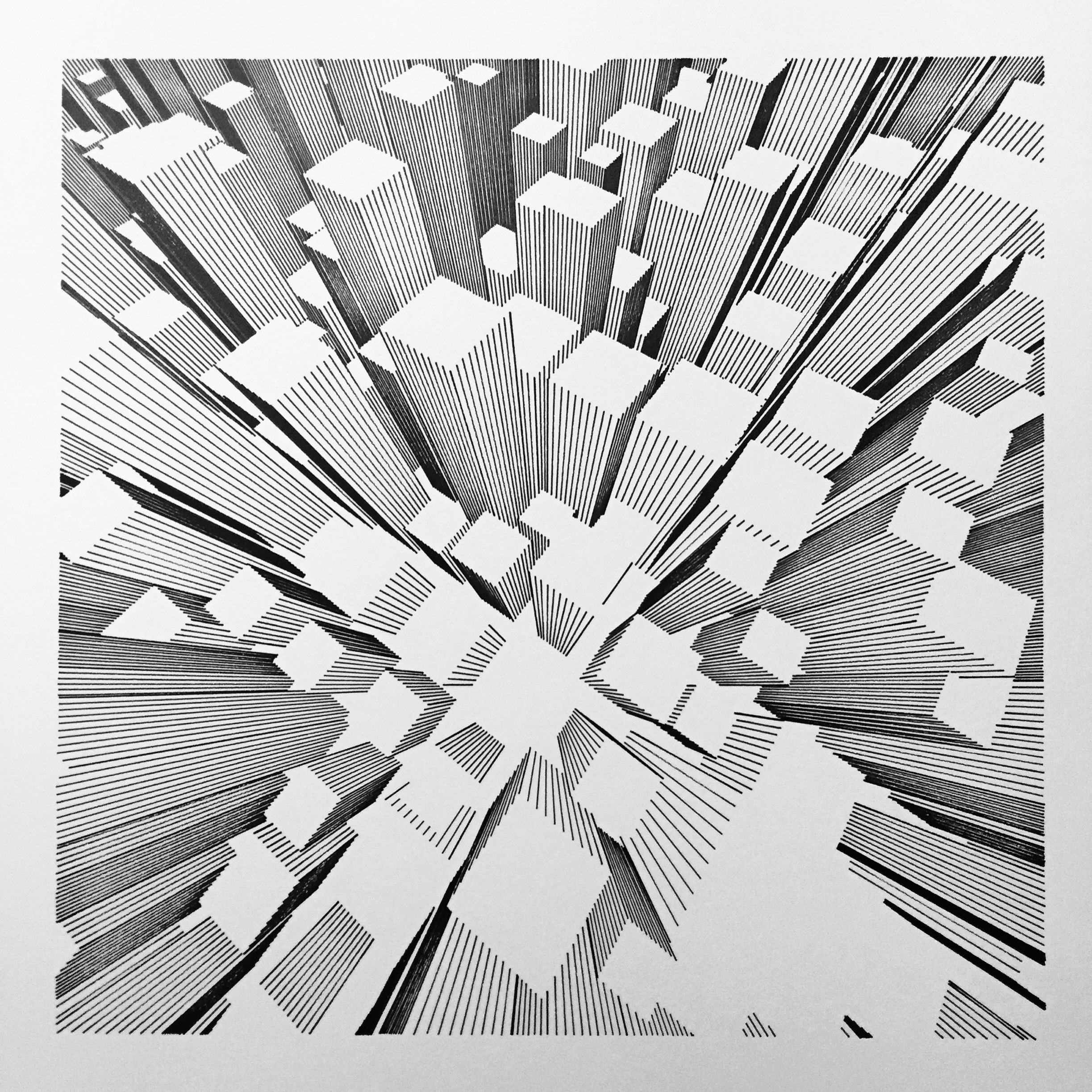
Rendering engine that produces 2D vector graphics (think SVGs) depicting 3D scenes.
Unlike OpenGL, where the output of the rendering pipeline is a rastered image, the output of ln is a set of 2D vector paths. It supports texturing, CSG, and more! I created this so I could plot 3D drawings with my pen plotter, which naturally requires vector input.
Links: GitHub

Path Tracer January 2015
CPU-only, unidirectional path tracing engine written in Go.
This was the first thing that I wrote using Go and I've been loving it ever since! The inspiration for this project came from Evan Wallace's WebGL Path Tracing.
- Supports OBJ and STL file formats
- Supports textures, bump maps and normal maps
- Supports raymarching of signed distance fields
- Supports volume rendering from image slices
- Supports various material properties
- Supports configurable depth of field
- Supports iterative rendering
- Supports adaptive sampling and firefly reduction
- Uses k-d trees to accelerate ray intersection tests
- Uses all CPU cores in parallel
- 100% pure Go with no dependencies besides the standard library
Links: GitHub


GPS September 2014
Real-time 3D visualization of actual GPS satellite locations.
This code interfaces with a USB GPS receiver and produces a 3D visualization of GPS satellite positions for all of the satellites that are currently in view.
Links: GitHub


HiRISE August 2014
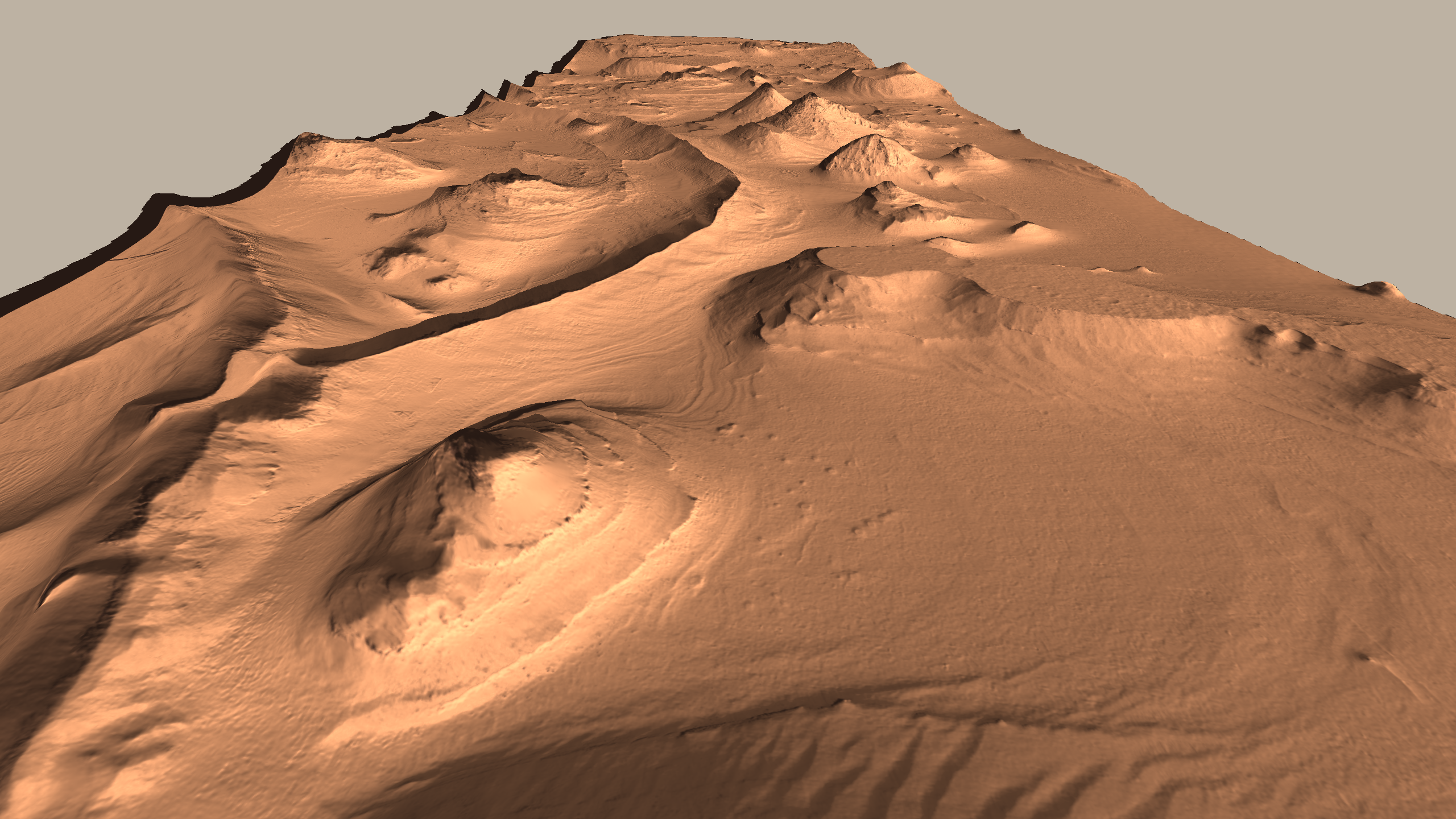
Fly through real Martian landscapes using data released by HiRISE.
This code converts HiRISE DTMs from their PDS format to a 3D mesh in STL format with an accompanying normal map texture for high-resolution lighting. The visualizer was written using pg, my Python OpenGL library.
Links: GitHub